
News
Safeguarding Update - Water Safety
BackAn equivalent of a classroom of children drowns each year in England
Source: 2019-2025 NCMD data
Top Tips
- Supervision is Key: Always keep children within arm's reach and supervise them at all times in or around water.
- Bright Swimwear: Dress children in brightly coloured swimwear to make them more visible in the water.
- Avoid Inflatables: Never use inflatables in open water, as they can easily drift away.
- Learn Water Safety Basics: Teach children basic water safety skills, such as how to float and call for help.
- Be Aware of Beach Flags: Familiarize yourself with beach flags and their meanings to ensure safety.
- Research Locations: Before visiting a beach or pool, research the area to understand potential hazards and lifeguard services.
- Stay Calm in Emergencies: Teach children to stay calm and float on their back if they fall into the water.
- These tips can help ensure a safer experience for children during the holiday season.
Please take a look at The Royal Lifesaving Society Website for additional safety information
Parents Resources | Royal Life Saving Society UK ( RLSS UK )
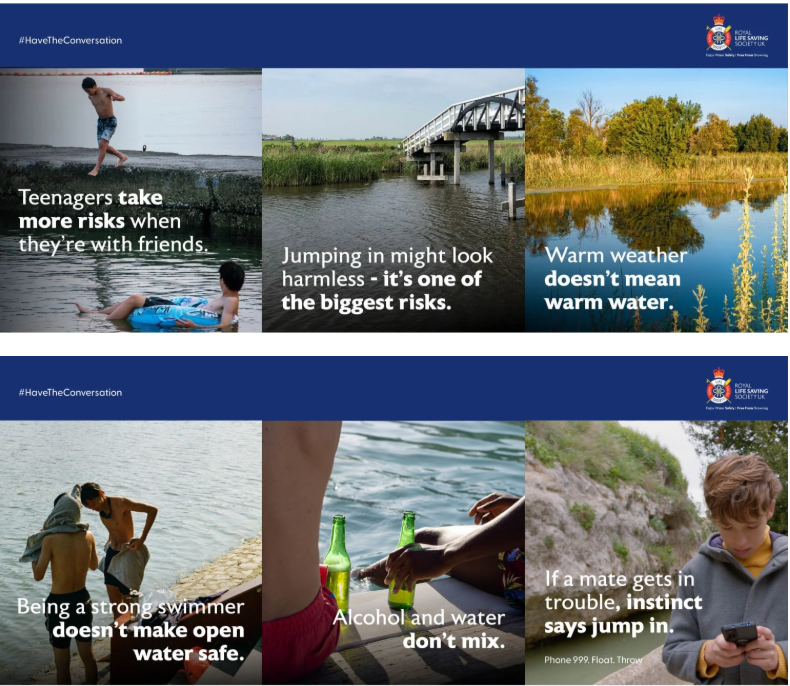
Risky behaviours teenagers commonly take around open water - understand them so the conversation lands.
These are the situations worth talking about:
1. Peer‑pressure activities
- Group settings often encourage risk-taking, especially around water.
- Teens overestimate their abilities and underestimate hazards.
2. Jumping or diving into unknown water
- Rivers, lakes, and canals can hide rocks, sudden drops, debris, or submerged objects such as shopping trolleys and thick weeds that can entangle limbs.
- Water may be shallower than expected or contain hazards that can cause serious injury and make it difficult to get out.
- This is a leading cause of spinal injuries and drowning.
3. “Tombstoning” from bridges, walls, or jetties
- Popular in warm weather, especially with groups.
- Cold water shock, unseen objects below the surface, and strong currents all increase the risk.
4. Swimming in cold or fast‑moving water
- Warm weather doesn't mean warm water - open water stays dangerously cold.
- Cold water shock causes an involuntary gasp and loss of breathing control within seconds - even for strong swimmers.
- Even confident swimmers can quickly lose strength, control and coordination. Panic makes it worse.
- Additional risks:
- Strong currents increasing that quickly drain energy
- Weirs, sluices, or lock systems (powerful structures where water flow can trap or pull you under)
- Difficulty getting out of the water
- Many drowning incidents happen in late spring and summer when these risks are underestimated.
- Coastal waters bring additional risks such as tides and rip currents, which can quickly pull even strong swimmers away from shore.
- Open water is unpredictable - what you can't see, control, or feel immediately can put you at risk.
5. Drinking alcohol near or in water
- Impairs judgement, balance, and the body’s ability to respond.
- Often linked with accidental slips, falls, and poor decision‑making.
6. Using inflatables or makeshift rafts
- Inflatables can blow away or flip.
- Improvised rafts can collapse or trap limbs.
7. Running or messing around on slippery banks
- Banks can be unstable or covered in algae.
- Falling into deep water often catches teenagers off guard.
8. Swimming near boats or jumping from them
- Risk of propeller injuries, being hit by a vessel, or becoming trapped under pontoons.
9. Entering water to “rescue” friends
- Many teenage fatalities happen when a friend gets into difficulty, and others jump in.
- Panic and cold water shock can overwhelm even strong swimmers, making rescue extremely dangerous without training.
10. Exploring drains, culverts, weirs, or restricted areas
This activity is highly dangerous due to:
- Fast flows
- Sudden surges
- Low oxygen levels
- Entrapment hazards
Cold water shock can affect anyone - even strong swimmers, even on hot days.